Booty Building Theory 🍑: The Science Behind Glute Growth 👨🏿🏫
Glute growth has carved out a massive share of social media these days with endless workouts, band circuits, and promises of overnight results.
Much of it, frankly, is all smoke and mirrors.
Welcome to Glute 101. Today, we’re breaking down what actually builds a stronger, fuller backside.
After consulting with countless clients, one pattern keeps showing up: women aren’t failing because they lack effort. They’re following incomplete information or programs that lack progression, specificity, and recovery.
If you want glutes that are stronger, fuller, and shapely, here’s a few things that you have to know.
The Glutes Aren’t One Muscle and Shape Depends on All of Them
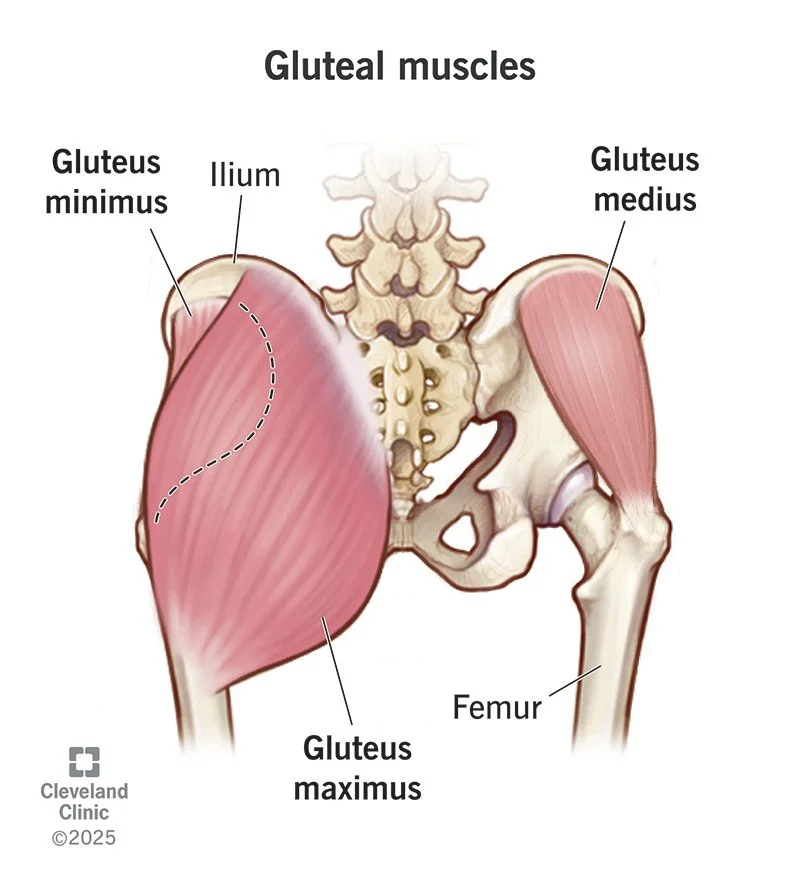
glute anatomical structure
When people say “glutes,” they usually mean one general area. In reality, the butt is built from three primary muscles working together.
Gluteus maximus- primary driver of size and projection
Gluteus medius- contributes to upper and lateral fullness
Gluteus minimus- supports stability and hip control
Studies of biomechanical work consistently shows the gluteus maximus acts as the dominant hip extensor during loaded lower-body tasks (Contreras et al., 2015; Distefano et al., 2009). That’s why heavy hip extension work, such as glute bridges and RDLs, sits at the center of almost every successful glute program.
In practice, I see this mistake often: clients want to pile on cable and band work but never load the movements that actually grow the max. The workouts feel productive due to the burn but there is no measurable change to the primary muscles.
The best programs combine heavy hip extension, unilateral control, and targeted abduction work. Over time, that combination builds size, shape, and function.
The Reality Caveat: Genetics Shape the Canvas
Before I we go any further I must acknowledge that no serious conversation about glute development is complete without acknowledging genetics.
Training can and absolutely will grow the glute muscles, often dramatically. But skeletal structure, muscle insertion points, and fat distribution patterns all influence how that growth ultimately presents.
Why the Shape of the Butt Doesn’t Perfectly Match the Glute Muscles
One subtle anatomical detail many people miss is that the visible shape of the butt does not perfectly follow the borders of the gluteus maximus muscle. The final contour is influenced by both muscle and surrounding fat structures.
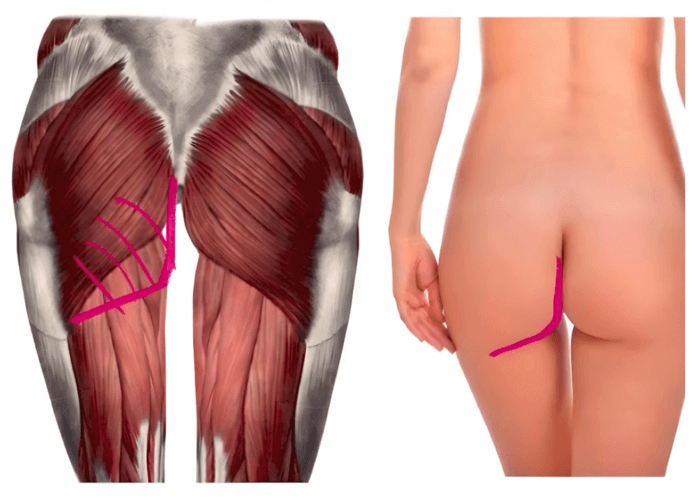
Regular anatomy books vs. a real butt: the Gluteal fat and the Gluteal crease are missing.
A particularly important structure is the gluteal crease, the fold where the butt meets the upper thigh. This crease forms where a horizontal band of connective tissue presses across the gluteus maximus and nearby fat pads, creating the characteristic fold and helping define the rounded lower contour of the butt.
This explains why simply growing the gluteus maximus doesn’t always change the lower outline of the glutes as dramatically as people expect. The underlying muscle grows, but the external shape is also influenced by connective tissue and fat distribution.
Research on regional fat storage shows wide individual variation driven by hormonal and genetic factors (Karastergiou et al., 2012; Bouchard et al., 1990). That variability helps explain why two people can follow the same program, build measurable muscle, and still display different silhouettes.
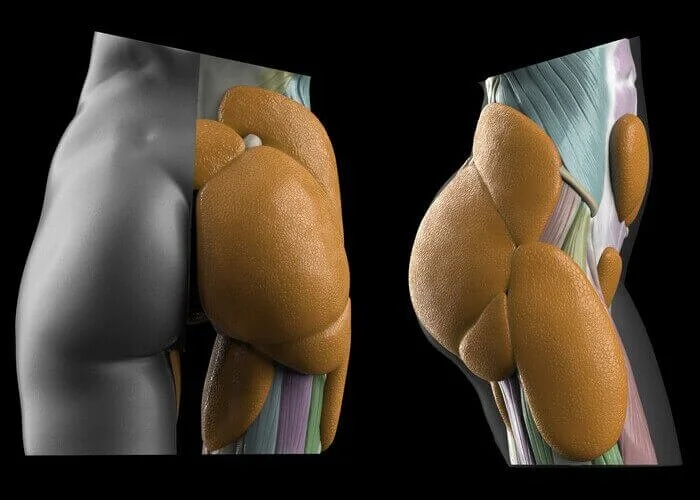
Female subcutaneous fat in the butt and hip area.
The Role of Fat Pads in Glute Shape
Another under-discussed contributor to glute appearance is subcutaneous fat pads. These pads sit over the muscles and can significantly influence how the butt looks externally.
For example, the medial gluteal fat pad sits in the lower inner portion of the buttocks and contributes to the fullness and continuity of the glute shape. Without it, the butt would appear incomplete or flattened in that region.
In females especially, several fat pads contribute to the final silhouette of the hips and glutes, helping create the characteristic curvier shape often associated with the female physique.
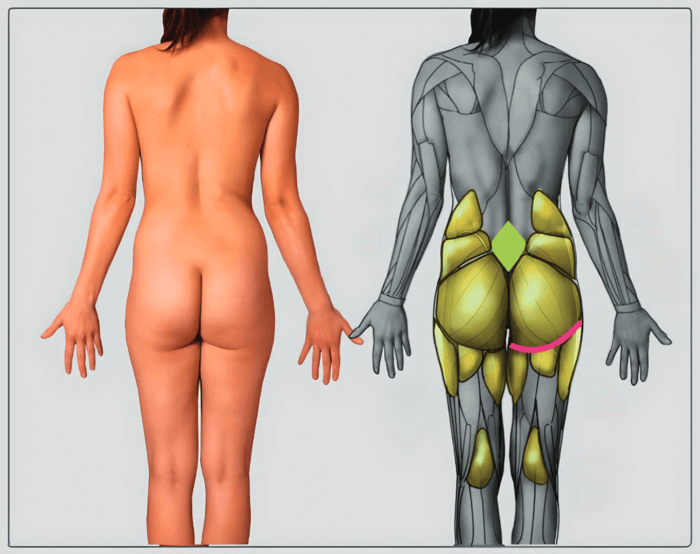
Diagram of the typical female fat pads – posterior view.
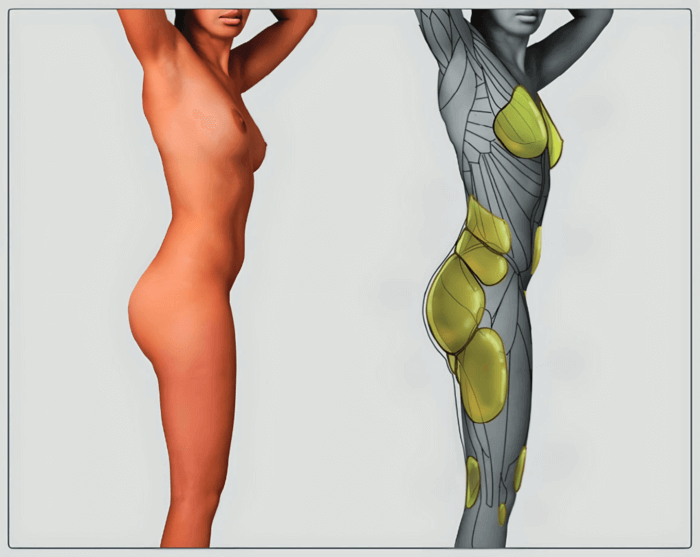
Diagram of the typical female fat pads – side view.
This reinforces an important point: visible glute size and shape can come from both muscle and fat distribution, and the balance between those two varies widely between individuals. (Karastergiou et al., 2012).
That’s why two people can measure similarly around the hips yet look very different in firmness and lift. Muscle-driven hypertrophy tends to create a denser, more projected look. Higher fat contribution usually produces a softer contour.
What genetics do not determine, however, is your capacity to improve. In most cases, clients have far more room to build glute mass than they think, they just haven’t applied progressive overload long enough. For clients chasing long-term shape and strength, muscle development is the lever they can control most reliably.
The Biggest Glute Growth Myths (And What Actually Works)
Myth 1: You Just Need to Feel the Burn
The burn feels productive. It’s also frequently overrated.
Reality: Mechanical tension is the primary driver of hypertrophy. The literature consistently identify tension and proximity to failure as key stimuli for muscle growth (Schoenfeld, 2010; Schoenfeld et al., 2021).
High-rep burn work has value, especially for muscular endurance, but without progressive loading progress falls short of expectations.
What to do instead: progress hip thrust and hinge dominant loads, train within 3 reps to failure in the 8-12 rep range, and use burn work as a finisher.
Myth 2: Activation Drills Build Your Glutes
Resistance bands and activation absolutely have their place in a program. In fact, starting workouts with these exercises will enable the “mind/muscle connection necessary for the primary exercises. We just have to be careful not to lend too emphasis on activation at the cost of the resistance training.
Reality: Activation improves neuromuscular readiness and positioning, but hypertrophy still depends primarily on sufficient mechanical tension and weekly volume (Schoenfeld, 2010).
I still use activation with all of my clients, especially those who struggle to feel their glutes early in sessions. But the real growth work starts once meaningful load is on the bar (or dumbbell/kettlebell).
Myth 3: You Need Endless Exercise Variety
If you do enough scrolling on your feed, you will see hundreds of variations and angles of the same movement with the purpose of isolating the lateral head of this and the medial head of that. Trying to incorporate these endless variations into every workout will inhibit your ability to progress, and keep you in the gym for hours.
Reality: Longitudinal hypertrophy research shows muscle growth tracks closely with progressive tension and sufficient weekly volume, not constant movement rotation (Schoenfeld et al., 2017).
As I progress my clients through their programs, I focus on a few main lifts until we reach our goal checkpoints. Once we review our goals, and identify a specific region that we want to bring along, then I start to incorporate some of those specialty movements that target specific areas. It is essential that we establish a sound foundation first!
My approach: keep primary lifts stable for 6–12 weeks, progress before replacing, and rotate accessories, not foundations
Myth 4: More Glute Days Means Faster Growth
I’ve had more than a few clients want to hit their glutes and legs 3+ times per week! I appreciate the commitment, really! I immediately advise them on the danger of overtraining which according to the National Academy of Sports Medicine is a state in which excessive training stress without adequate recovery results in reduced performance capacity and negative physiological adaptations
Dose–response research suggests hypertrophy improves with greater weekly set volume up to recoverable limits, after which returns diminish (Schoenfeld et al., 2019; Baz-Valle et al., 2022).
Most women I work with grow best with 1-2 focused sessions per week, at least 48 hours between hard exposures, and training volume synched with recovery capacity.
More isn’t always better!
The Six Highest-Return Glute Exercises
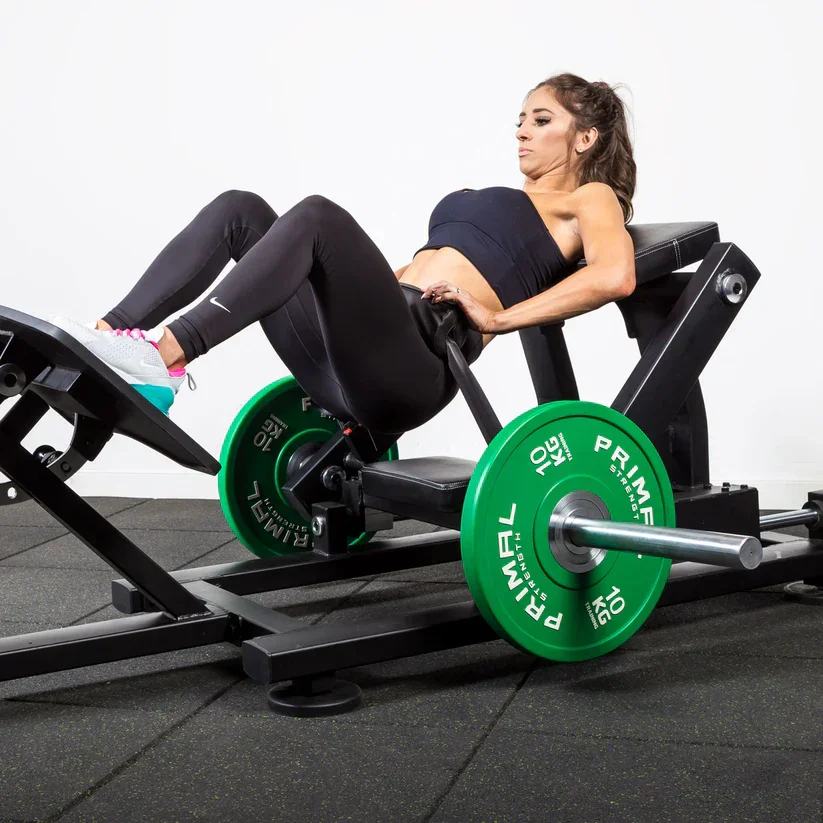
Hip Thrust Machine
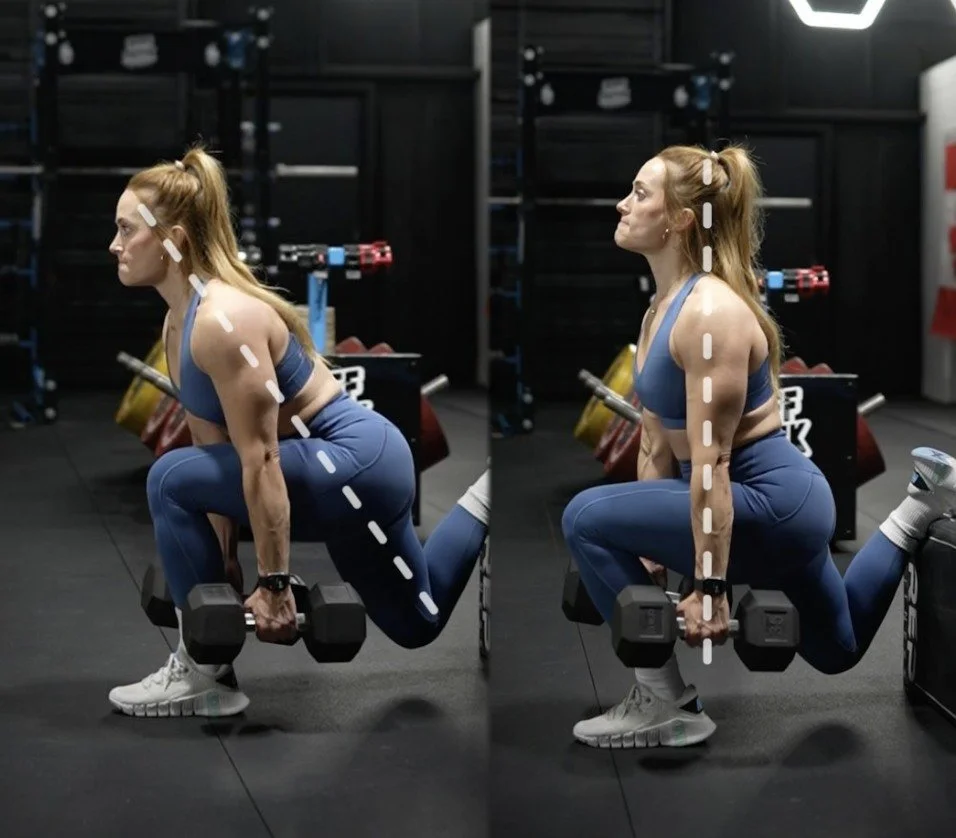
Bulgarian Split Squat
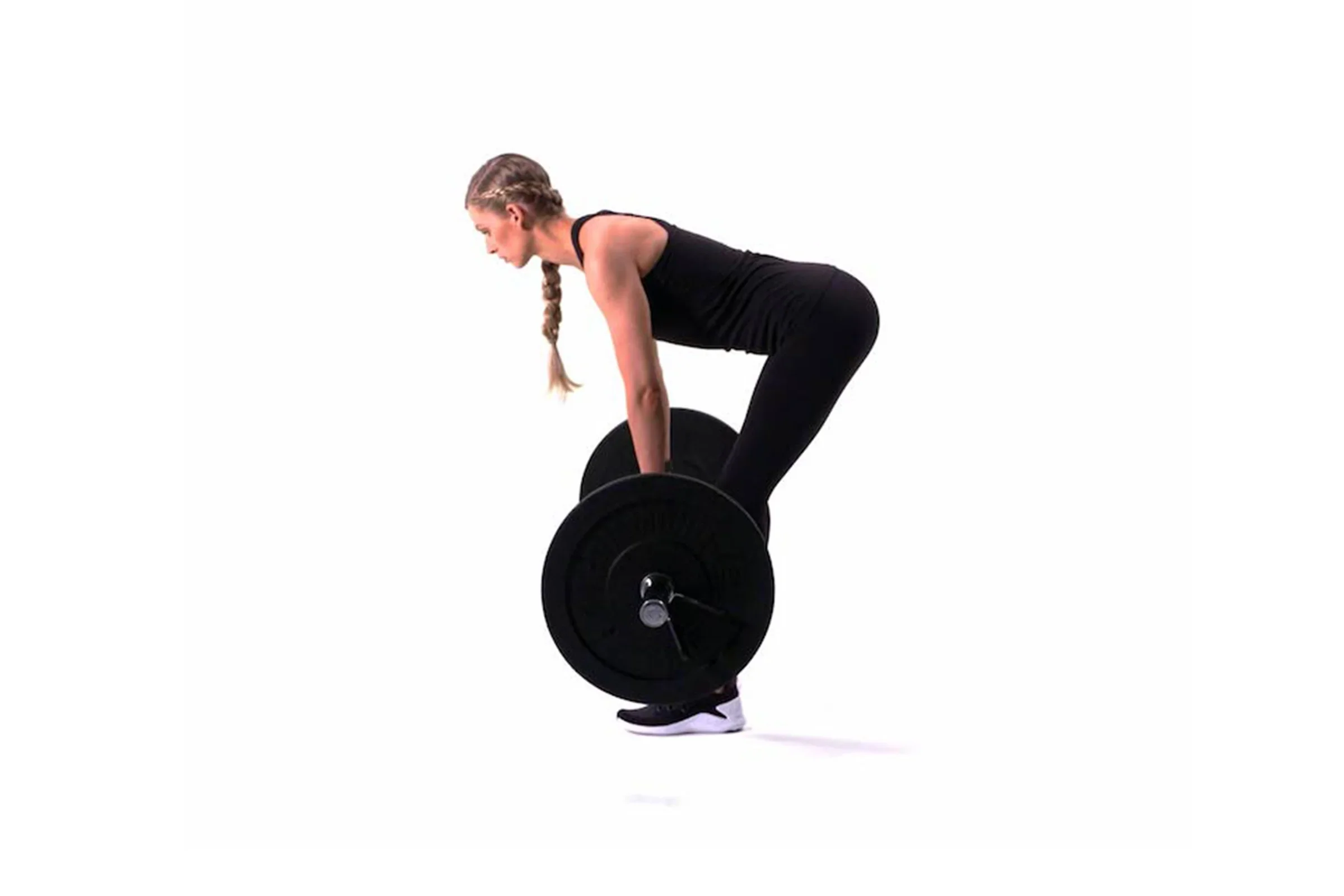
Romanian Deadlift
If you’re still with me, you have finally made it to what you were probably looking for! Include these movement into your program, and progressively overload them, and you’re covering the majority of what drives glute growth.
1. Barbell Hip Thrust (or Glute Bridge Machine)- primary driver of size and projection
2. Romanian Deadlift - heavy stretch-mediated tension through a hip hinge
3. Bulgarian Split Squat (slight forward lean) - unilateral density, strength and shape
4. Deep Squat (Ass to Grass) - global lower-body stimulus, deep glute stretch under load at the bottom drives growth
5. Hip Abduction (machine or cable) - upper/side contour via glute medius
6. Walking Lunges (long stride) - high-return unilateral pattern
How Much Weekly Volume Actually Works
For most trained women, the following guidelines are solid targets to aim for:
Beginner: 8-12 hard sets/week
Intermediate: 12-18 hard sets/week
Advanced: 16-24 hard sets/week
These ranges align with dose–response hypertrophy literature showing greater growth with higher weekly set volumes up to recoverable limits (Schoenfeld et al., 2019; Baz-Valle et al., 2022).
As always, the best number is the one you can recover from while still progressing load.
Nutrition: Feed The Booty! 🍽️
Training provides the stimulus for muscle growth, but nutrition determines whether the body has the resources to adapt effectively.
For glute hypertrophy, two factors matter most: sufficient protein and adequate energy intake.
Muscle growth requires a positive balance between muscle protein synthesis and breakdown. Research consistently shows that consuming adequate dietary protein supports muscle repair and growth following resistance training (Morton et al., 2018).
For most active women, a useful guideline falls around 7–1 grams of protein per pound of body weight per day.
Protein intake alone, however, isn’t enough if total calories remain too low. Many clients trying to build glutes are simultaneously attempting aggressive fat loss, which makes meaningful hypertrophy difficult.
Generally, growing the glutes usually happens best when protein intake is sufficient, calories are at maintenance or a small surplus, and recovery between sessions is adequate.
This doesn’t mean large weight gain is required. But chronically under-fueling the body limits its ability to build new muscle tissue.
Final Word
Glute growth isn’t rocket science, but it does require patience and consistensy. Build the muscle with progressive tension, train the full function of the hips, and recover well enough to repeat the work next week.
The clients who see the biggest changes usually aren’t doing exotic workouts. They’re doing the fundamentals consistently, and for longer than most people are willing to stay on the wagon (Oregon Trail reference for my old folks).
References
Baz-Valle, E., et al. (2022). Sports Medicine.
Bouchard, C., et al. (1990). Human Biology.
Contreras, B., et al. (2015). Journal of Applied Biomechanics.
Distefano, L. J., et al. (2009). Journal of Orthopaedic & Sports Physical Therapy.
Karastergiou, K., et al. (2012). Journal of Lipid Research.
Morton, R. W., et al. (2016). Journal of Applied Physiology.
Schoenfeld, B. J. (2010). Journal of Strength and Conditioning Research.
Schoenfeld, B. J., et al. (2017). Journal of Strength and Conditioning Research.
Schoenfeld, B. J., et al. (2019). Sports Medicine.
Schoenfeld, B. J., et al. (2021). Sports Medicine.
Morton, R. W., et al. (2018). British Journal of Sports Medicine.
